Possible use · Lanes, the same thing at every table
Three tables, same product.
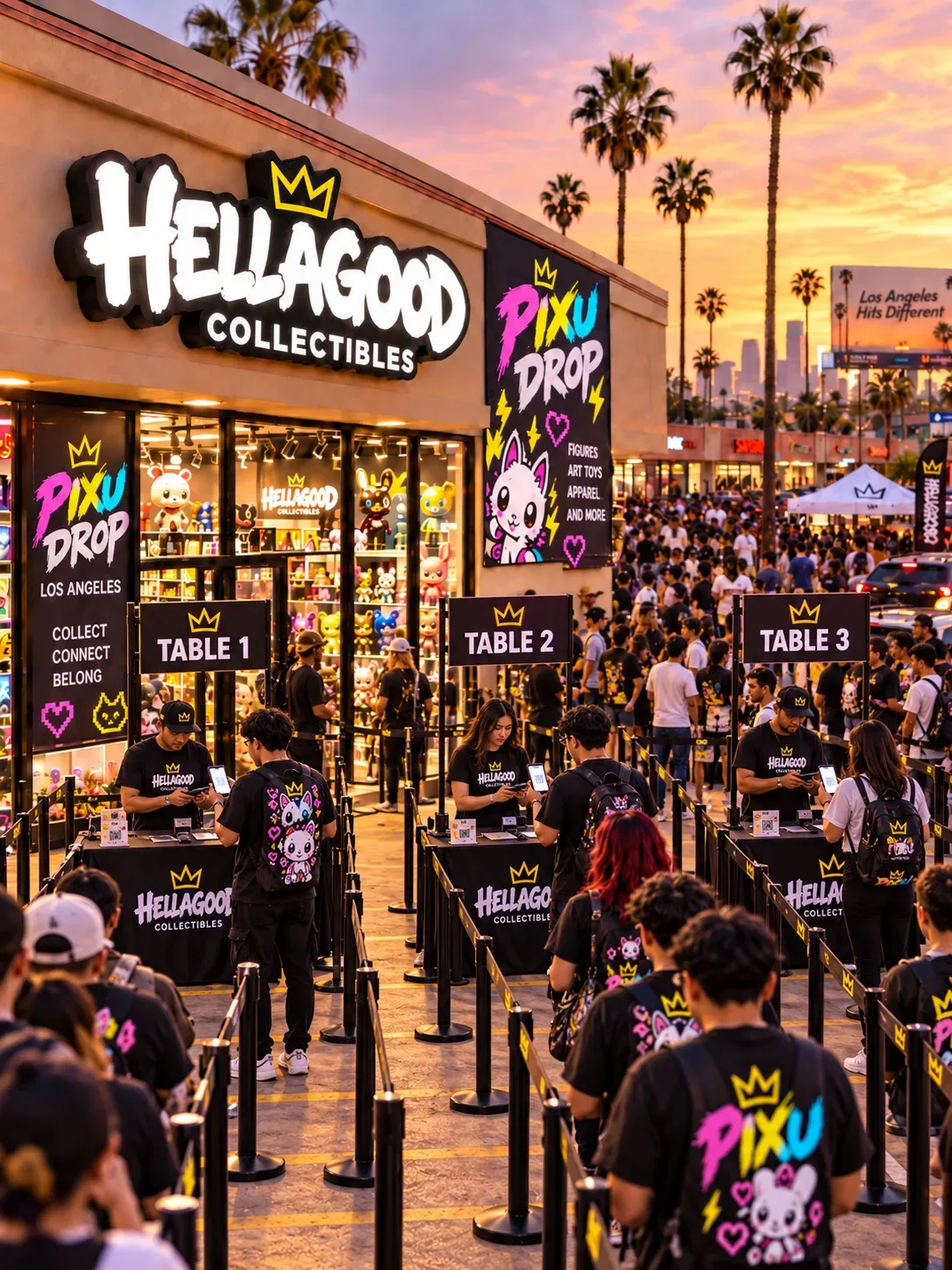
A Pixu pocket-pet release in Los Angeles. Three tables handing out the same toy, and nobody has to pick a line. Here is every setting that shape of night needs, and the screen that shows it.
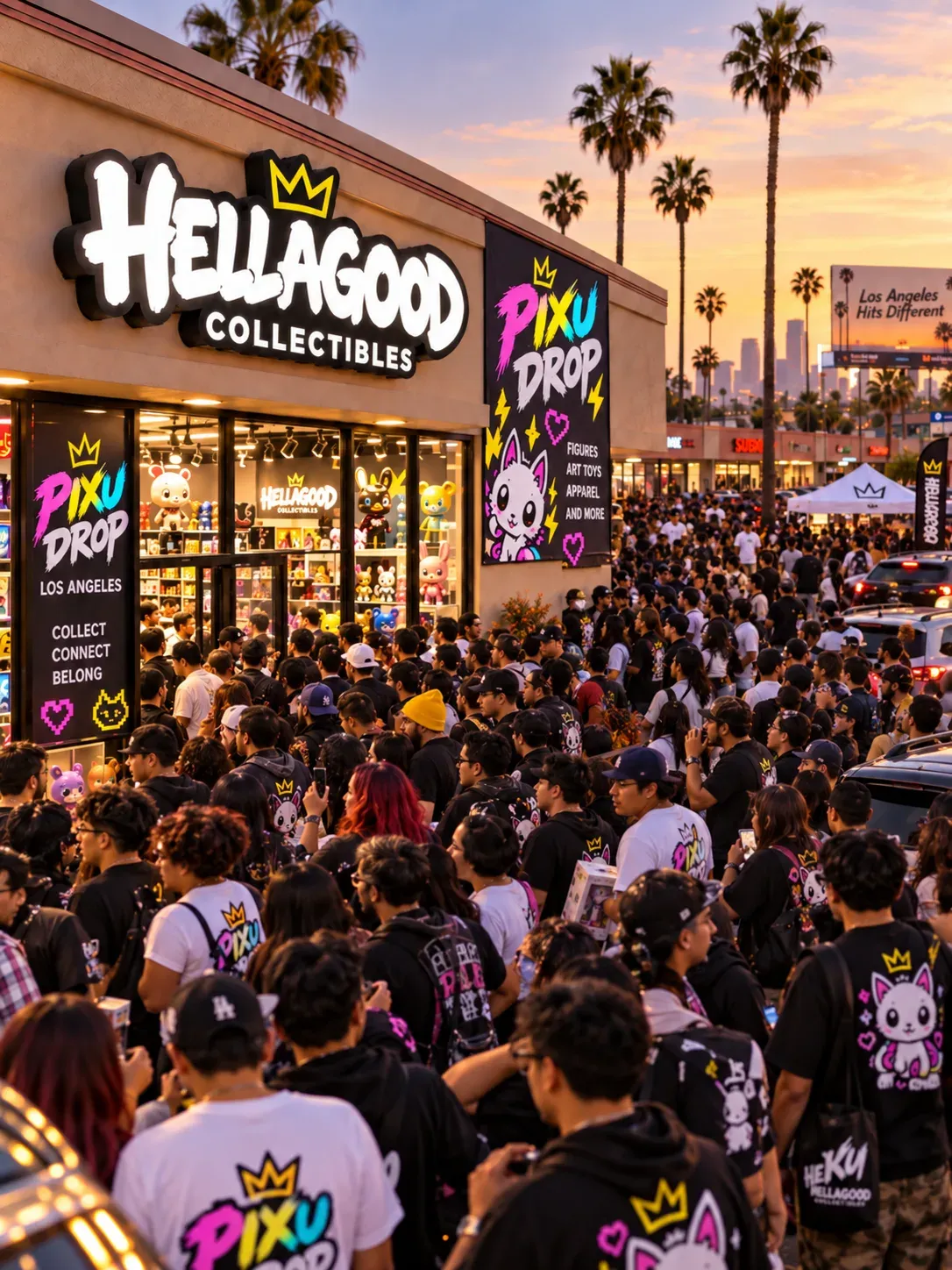
The same crowd, twice
A queue this good is worth arranging.
Both of these are a success. The difference is what the crowd is doing while they wait — and whether anyone standing at the back knows it is worth staying.
The first decision
Ladder or Lanes?
Every drop answers this before anything else, and it shapes the whole night. It is not about your industry — it is about how many ways in there are.
One door
Waves climb toward a single entrance. A shop that holds 25, a crowd of 300 — people move up a step at a time until they are next.
- One queue, several stages of getting into it
- The colour on a pass is how close you are
- Right when the limit is the room
Many spots
Several places serving at once. Nobody climbs anywhere; a call sends a batch of people to a specific table, and the next batch goes to the next table free.
- Several ways in, all open at the same time
- The pass names which table, when it is their turn
- Right when the limit is how fast hands move
The second decision
What are your lanes?
Lanes asks one more question, and it changes what a guest's night looks like more than any other setting: are your tables the same thing, or different things?
Three tables, one Pixu
Every table hands out the identical product. There is nothing to choose between them, so the system places people — whichever table is free next.
- Check-in never asks which line they want
- A pass names no table until a call sends them to one
- One turn, total — served once and their night is done
- Turning up at a table they were not sent to reads already been
Four tables, four shoes
Each table is its own product. Now the choice matters, so guests pick the line they came for — and they can queue again somewhere else afterwards.
- Check-in asks which line and shows how many are ahead
- The pass carries a card of every table, with Join buttons
- One turn at each — a Voss and a Mercer is fine
- Finishing one lane offers the next
“Any lane can take them”
That one line is the setting, showing its work. With three identical tables there is no per-table queue to manage — there is one pool of people who are here, and whichever table frees up next takes the next batch.
The staff running it never has to think about balance. They tap the table that just emptied and call eighteen more.
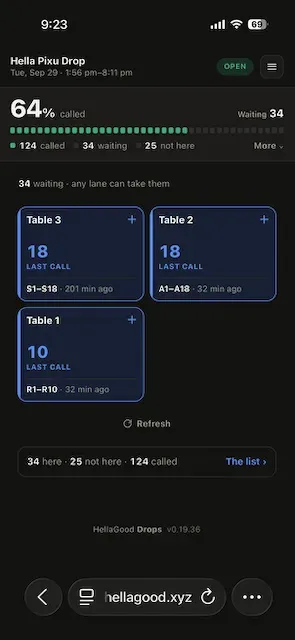
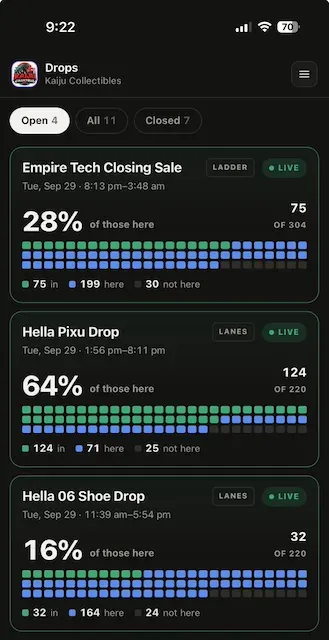
Three tables, one pool. Each shows its last call and how long ago.
What to turn on
Four settings that do the work.
Everything else can be left alone. These four are the ones that decide how the night actually runs.
Check in at the door
Signing up online is not the same as being there. With check-in on, a guest scans the printed sign when they arrive — and only people who are actually present can be called.
Without it, a table gets eighteen names and half of them are still parking. The pass says Stay where you are until it is their turn, which is the whole reason the crowd can spread out.
Nobody is called into a line they cannot walk to.
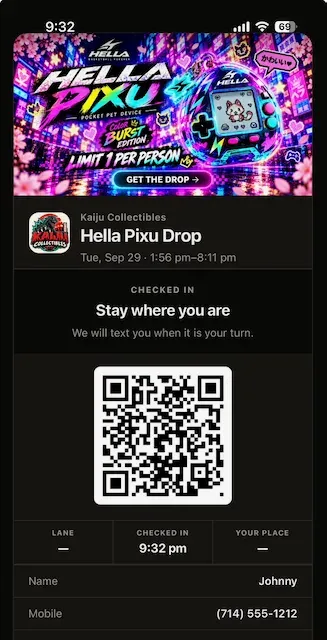
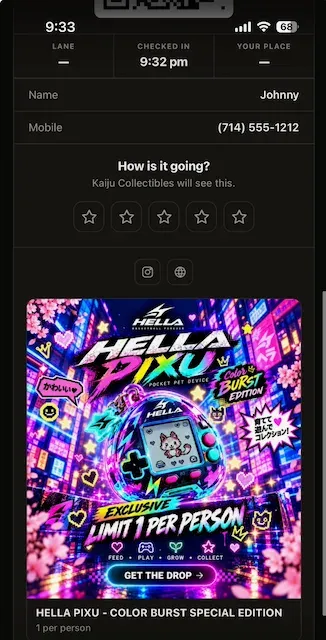
Checked in at 9:32. No table named yet — there is nothing for them to choose.
A place in line on the pass
Every call stamps a letter and a number — T19. The letter is that call, the number is their spot within it.
Staff at the table call out a range, and nobody argues about who was first, because everyone is holding the answer. It is the difference between a queue and a crowd standing near a queue.
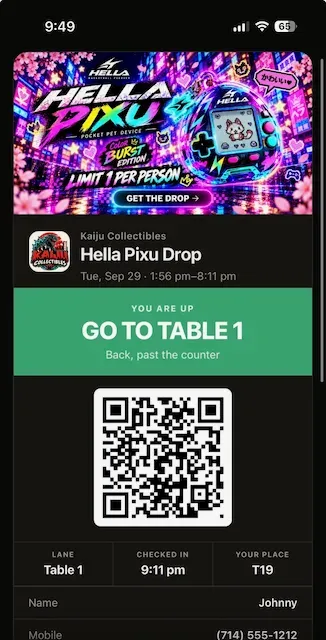
Called. GO TO TABLE 1, place T19, and the words underneath are the owner's own.
Random draw, not first come
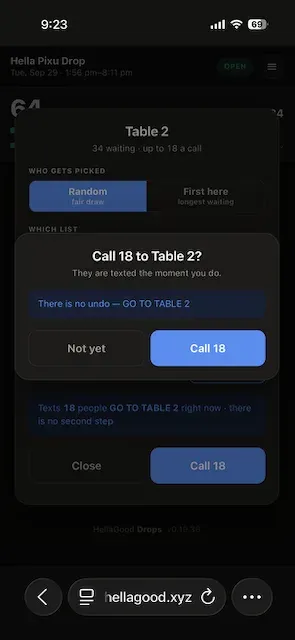
When a table is ready, the picker offers two ways to fill it: Random, a fair draw from everyone here, or First here, longest waiting.
The fair draw is the one to use here. Turning up four hours early stops being the strategy, which is exactly what takes the pressure off the pavement — and off the shops either side.
The same sheet narrows by list: everyone, or just vip, or just raffle. One call, one group.
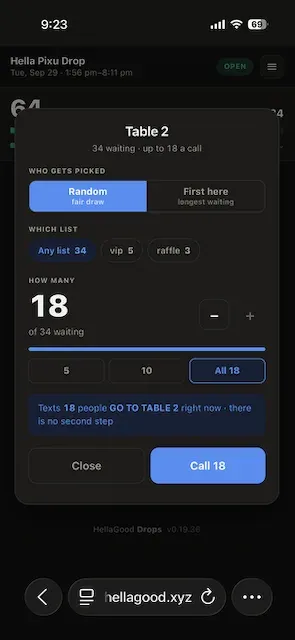
18 of 34 waiting. The blue line says exactly what is about to happen.
Scan at the table
A staff phone scans the pass as each person reaches the front. Green means they were called here and this is their turn.
It is the only moment the system sees a person, and it is what makes one per person real rather than hopeful — the same pass scanned twice reads already been.
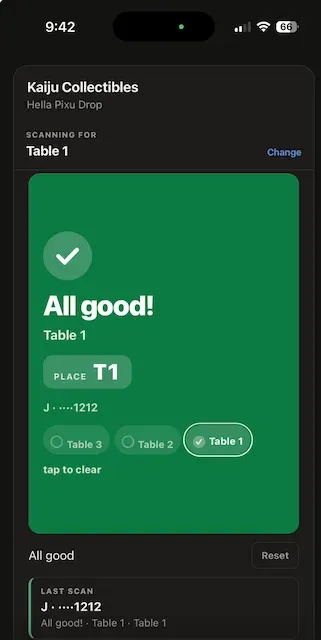
All good. The table is named, so a pass from another line cannot pass here.
What a guest holds
The pass is the product.
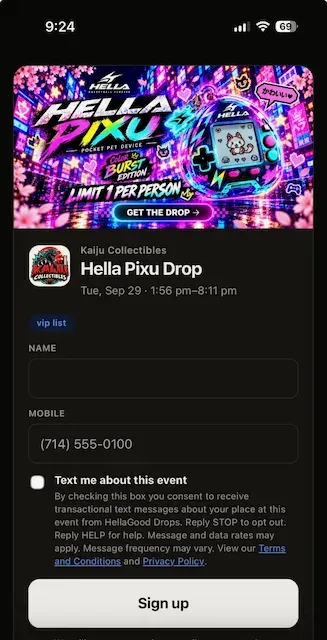
A guest looks at this more than they look at your shop. Put the artwork on it and the thing in their hand for three hours is a piece of the drop, not a ticket stub.
Run your own
Set it up in about ten minutes.
Two questions decide almost everything: one door or many spots, and the same thing or different things. The rest is a name, a date and how many you can serve at once.