Possible use · Lanes, a different thing at every table
Four shoes, four lines.
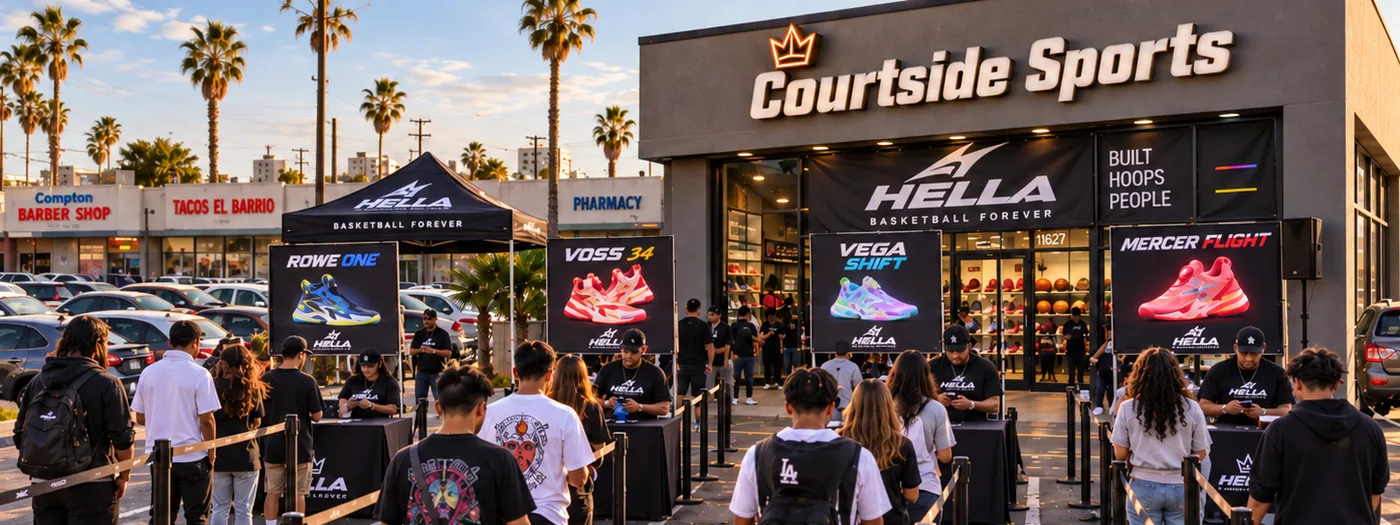
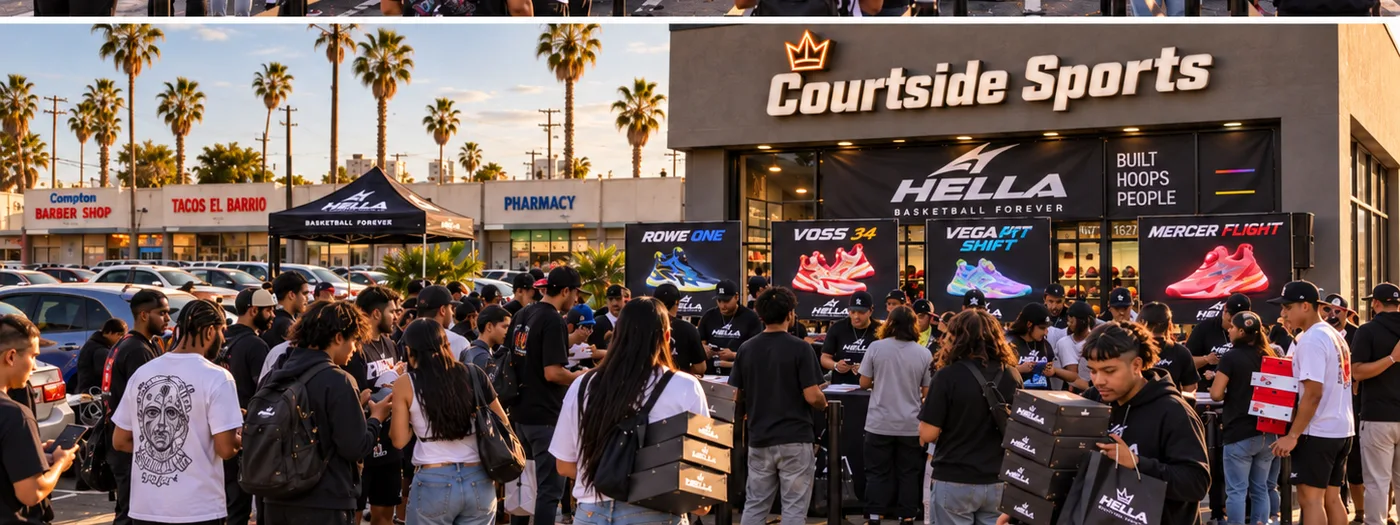
A signature basketball release on four stations, one colourway each. Guests queue for the shoe they came for — and when they have it, they can get in line for the next one. Here is every setting that shape of night needs, and the screen that shows it.
The same crowd, twice
Four things to want, four places to want them.
Both of these are a good night. The difference is whether somebody at the back can see which line is theirs — and whether they have to stand in it to hold their place.
The first decision
Ladder or Lanes?
It is not about your industry — it is about how many ways in there are. Four tables serving at once is not a queue with stages; it is four queues.
One door
Waves climb toward a single entrance. A shop that holds 25, a crowd of 300 — people move up a step at a time until they are next.
- One queue, several stages of getting into it
- Right when the limit is the room
Many spots
Four stations open at once, each its own line. A call sends a batch to a specific table while the other three keep serving.
- Four ways in, all open at the same time
- The pass names which shoe, when it is their turn
- Right when the limit is how fast hands move
The second decision
What are your lanes?
This is the one that decides a guest's whole night. Are your tables the same thing, or different things? Four colourways are plainly different things — so the guest chooses, and the choice is worth something.
Four tables, four shoes
Each table is its own product, so the line you stand in is the shoe you get. Guests pick, and a turn at one does not use up the others.
- Check-in asks which line and shows how many are ahead
- The pass carries a card of all four, with Join buttons
- One turn at each — a Voss and a Mercer is fine
- Finishing one offers the next, on the same pass
Three tables, same product
Every table hands out the identical product. There is nothing to choose between them, so the system places people — whichever table is free next.
- Check-in never asks which line they want
- A pass names no table until a call sends them
- One turn, total — served once and the night is done
Collect the set.
Because a turn at one table does not spend the others, the pass becomes something to finish. Three green ticks and one to go is a reason to still be there at nine o'clock.
It also spreads the crowd on its own. Somebody who has their Voss walks to the shortest of the remaining three, not back to the same table — the queue balances itself.
One turn at each lane. Never the same one twice.
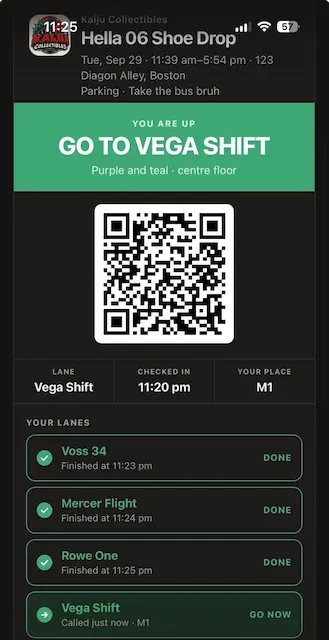
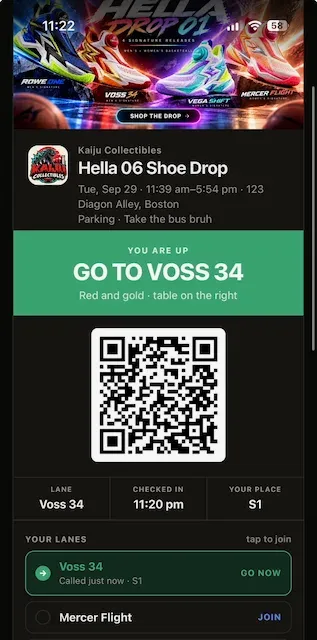
Three finished, the fourth called. GO TO VEGA SHIFT, place M1.
What to turn on
Four settings that do the work.
Everything else can be left alone. These four are the ones that decide how the night actually runs.
Let guests pick their line
Check-in asks which shoe they came for, and the pass carries all four with the one they chose marked IN LINE and the rest offering JOIN.
Nobody has to stand anywhere to hold a place. Joining a second line is a tap, from wherever they are — which is the difference between four lines and one crowd.
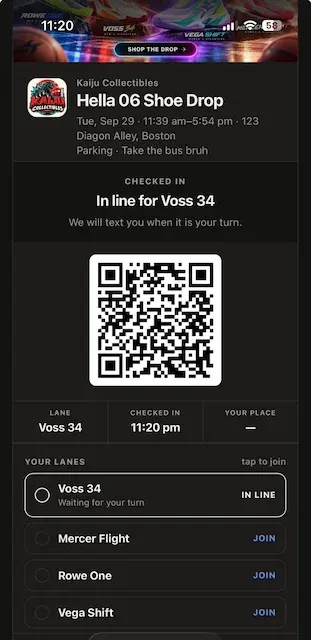
In line for Voss 34. The other three are one tap away.
Check in at the door
Signing up online is not the same as being there. With check-in on, a guest scans the printed sign when they arrive, and only people who are present can be called.
Until then the pass says Check in when you arrive — and their chosen line is already showing, so they know exactly where they are headed.
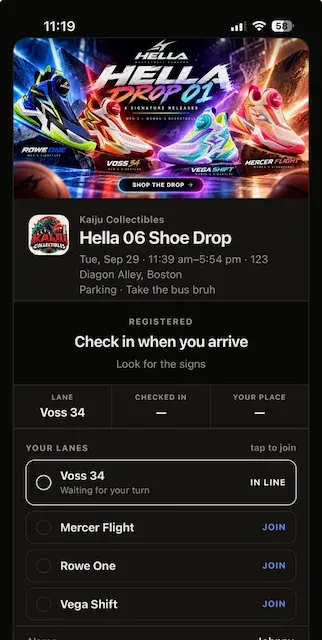
Registered, not yet here. Voss 34 is chosen and waiting for them.
Random draw, and who gets included
When a table is ready, the picker fills it: Random for a fair draw, or First here for longest waiting. It narrows by list too — everyone, or just vip, raffle or staff.
One switch matters more than it looks: include people with no lane choice. Not everybody picks a shoe at check-in, and that switch decides whether those 35 are reachable from this table or left for later.
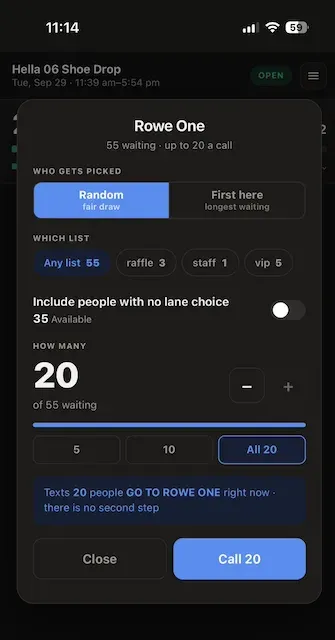
55 waiting for the Rowe One, 20 about to be called, 35 with no choice made.
A card per lane on the pass
Each line can carry its own artwork. Somebody queueing for the Vega Shift sees the Vega Shift on their pass — and when they move to another line, the card moves with them.
It is the same slot the drop-wide card uses, swapped per lane. The thing in their hand for three hours is the shoe they are waiting for.
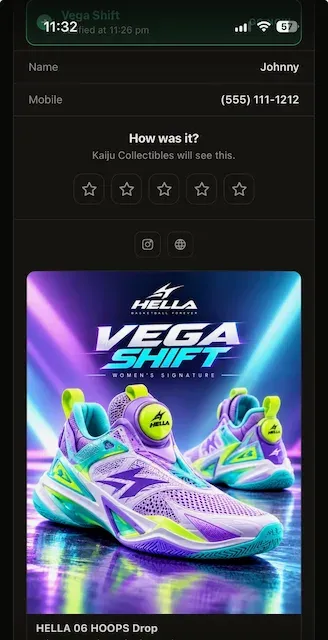
Finished with the Vega Shift, and still holding its card.
Running it
Four numbers, four buttons.
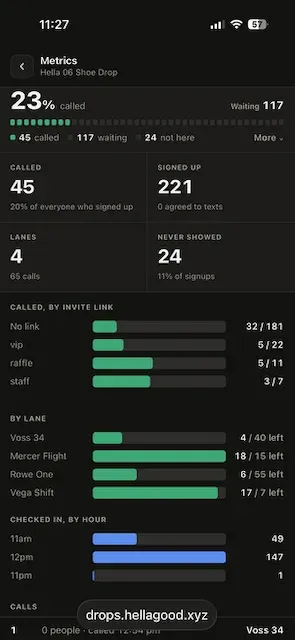
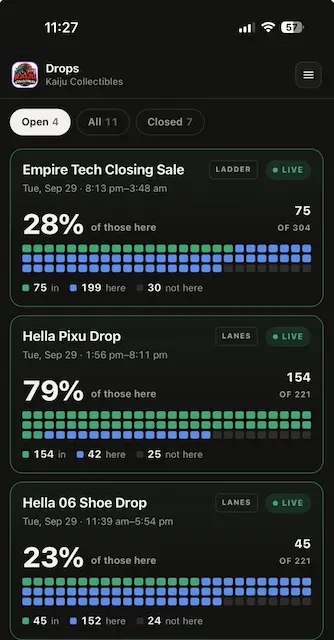
The board is one tile per shoe. Each says how many are waiting for that one and when it last called — so the table that has gone quiet is obvious.
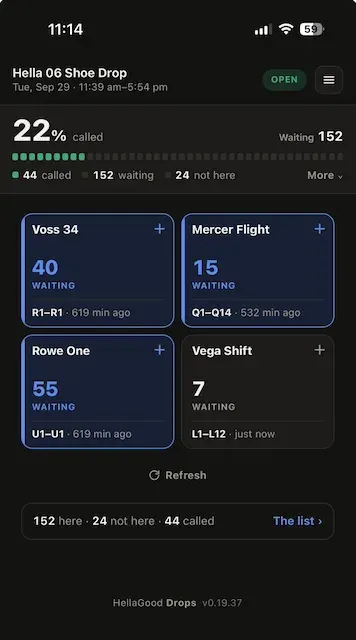
Run your own
Set it up in about ten minutes.
Two questions decide almost everything: one door or many spots, and the same thing or different things. The rest is a name, a date and how many you can serve at once.